Table of Contents
ToggleIntroduction
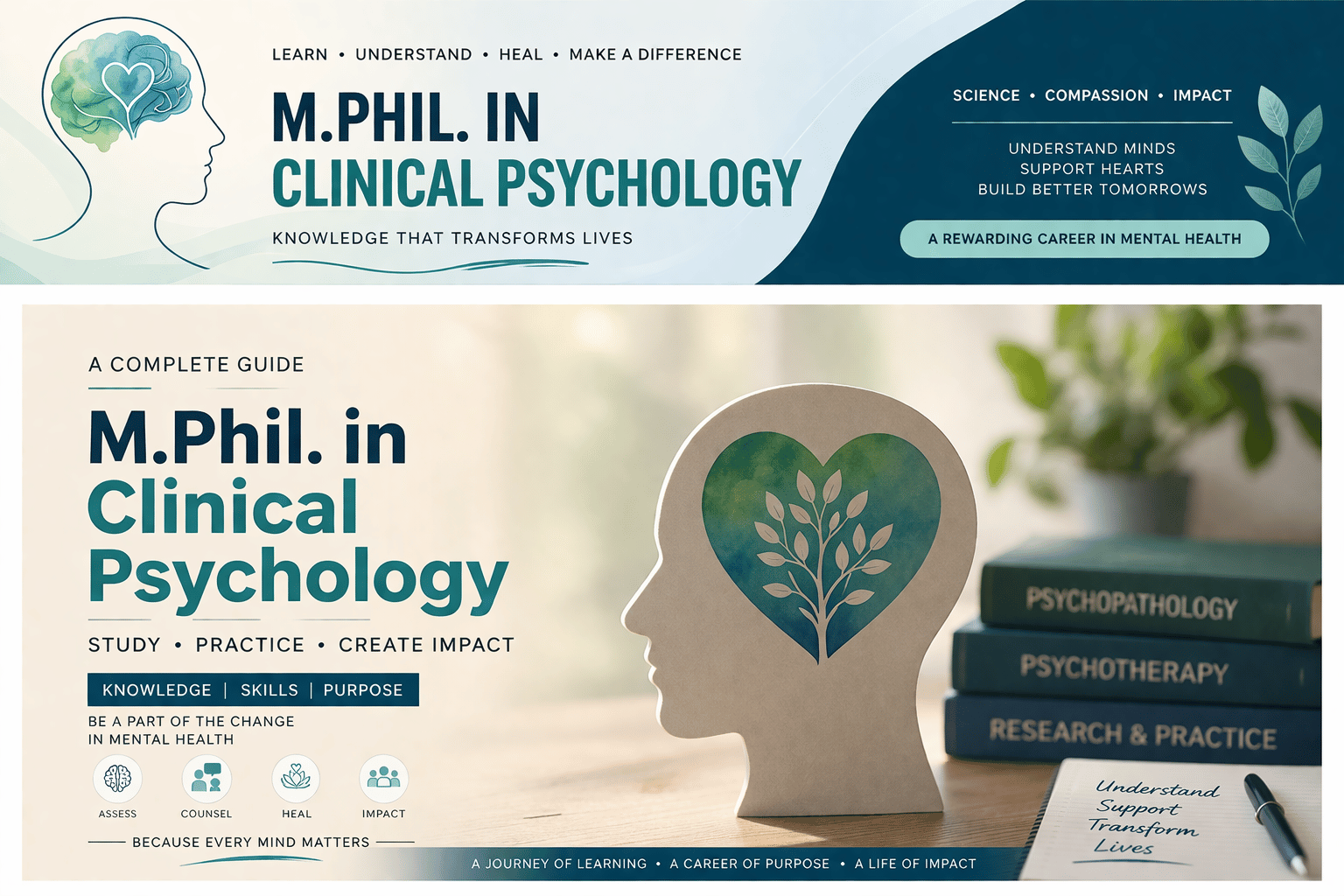
M.Phil. in Clinical Psychology is a highly specialized postgraduate program designed for individuals who aspire to build a career in mental health and psychological assessment. This course bridges the gap between academic psychology and real-world clinical practice. It focuses on diagnosing, assessing, and treating mental, emotional, and behavioral disorders using scientifically validated methods.
With the rising awareness of mental health issues in today’s fast-paced world, the demand for qualified clinical psychologists has increased significantly. An M.Phil. degree not only enhances professional skills but also opens doors to licensed clinical practice.
What is M.Phil. in Clinical Psychology?
M.Phil. (Master of Philosophy) in Clinical Psychology is a 2-year advanced training program that combines theoretical knowledge with hands-on clinical experience. It is recognized as a crucial qualification for becoming a licensed clinical psychologist in many countries, including India.
Course Objectives
- To provide in-depth knowledge of psychological disorders
- To train students in psychological assessment and diagnosis
- To develop therapeutic and counseling skills
- To offer supervised clinical training
- To promote ethical and professional practices in mental healthcare
Eligibility Criteria
- Master’s degree (M.A./M.Sc.) in Psychology
- Minimum required percentage (usually 55% or above)
- Entrance exam and/or interview (varies by institution)
Course Curriculum
The program includes both academic and practical training:
1. Theoretical Subjects
- Psychopathology
- Psychotherapy
- Psychological Assessment
- Neuropsychology
- Research Methodology
2. Practical Training
- Case studies and clinical diagnosis
- Psychological testing (IQ, personality, etc.)
- Therapy sessions (CBT, behavioral therapy, etc.)
- Internship in hospitals or mental health centers
Skills Developed
Career Opportunities
After completing M.Phil. in Clinical Psychology, candidates can pursue various roles:
- Clinical Psychologist
- Mental Health Counselor
- Rehabilitation Specialist
- Researcher
- Academic Lecturer
They can work in:
- Hospitals and clinics
- Mental health institutions
- NGOs
- Private practice
- Educational institutions
Importance of M.Phil. in Clinical Psychology
This program is essential for those who want to work directly with patients dealing with mental health issues. It ensures that professionals are well-trained and capable of handling complex psychological conditions responsibly.
Advantages of the Course
- Professional recognition and licensing opportunities
- High demand in healthcare sector
- Opportunity to make a positive impact on society
- Strong career growth and stability
Challenges
- Intensive training and academic workload
- Emotional demands while dealing with patients
- Requires continuous learning and supervision
Conclusion
M.Phil. in Clinical Psychology is a rewarding and respected career path for individuals passionate about mental health and helping others. It equips students with the necessary knowledge, skills, and practical experience to become competent mental health professionals. Despite its challenges, the course offers immense personal satisfaction and professional growth, making it an excellent choice for aspiring psychologists.