
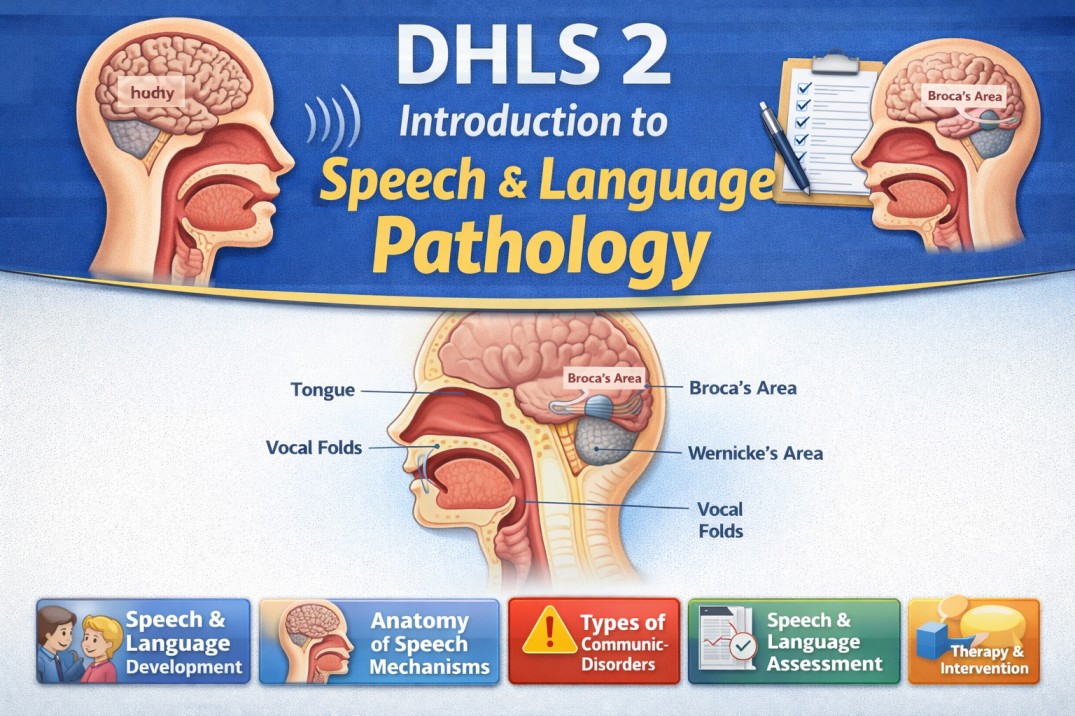
Definition of speech, language, communication and prosody
Speech: Speech is the verbal mode of communication. It includes two main components. First is the articulation ability which includes structure and function of larynx and vocal tract. Secondly, it comprises of the sounds of the language used. Thus, all humans share same articulatory mechanism, but different language groups make use of different sounds.
Language: Language is arbitrary system of symbols used for communication. It involves Phonology (use of sounds and speech patterns in language), Morphology (study of the forms and formation of words in a language), Syntax (how words are formed into complete sentences), Semantics (study of meaning of words used) and Pragmatics (use of language appropriate to the situations). Language is normal when these skills are acquired appropriate to the age and gender and follows the rules of the specific social group and culture.
Communication: Communication refers to the transformation of information from one individual to another and can occur by means of various processes and methods and depending on the channel used and the style of communication. Speech and language are the tools that humans commonly use to communicate. It is often categorized as receptive language and expressive language. Receptive language is the understanding of words and sounds. Expressive language is the use of speech (sounds and words) and gestures to communicate. Communication can be interpersonal (between individual) or intrapersonal (within individual e.g., thinking, reasoning etc). Communication is normal when it is appropriate to the age, gender, culture and language context.
Communication is the process of sharing information, and it requires at least two people—a speaker (sender) and a listener (receiver). Without both, communication cannot take place. Communication can occur through different means such as speaking, listening, reading, and writing. While speaking and listening are primary modes, reading and writing are considered secondary forms of communication.
Communication can also occur through signs and gestures, such as shaking hands or waving. It can be further enhanced using symbols, which may be simple (like road signs) or complex (like mathematical expressions such as is a basic algebraic identity that shows how a square of a sum can be expanded into simpler parts. In a similar way, language helps us express and simplify our thoughts for communication. Language is a mode of communication used to share ideas and feelings through speech, writing, or gestures, making understanding easier in daily life.
Speech is a verbal mode of communication that is produced using air from the lungs. The air passes through the larynx (voice box), where the vocal folds vibrate to produce sound. This sound is then modified by the articulators such as the lips, tongue, teeth, and palate, resulting in meaningful speech. Thus, speech is the sound produced by vocal fold vibration and shaped by articulators using expiratory air.
Prosody refers to the variations in speech, such as intonation, stress, and rhythm, which add meaning and expression. It is a suprasegmental feature, meaning it is superimposed on speech rather than being a part of individual sounds.
Speech, language, and communication are closely related, and their development is strongly connected to hearing ability.
Interrelation between Speech, Language and Hearing
Speech, language, and hearing are closely interconnected. A child learns to speak by listening to others, so hearing is essential for speech development. If a child cannot hear properly, they may not learn to speak naturally and may require special training. Hearing helps a person understand and learn a language, which is why unfamiliar languages are difficult to understand if we have not heard them before.
Speech and language are also interdependent. Language provides meaning and concepts, while speech expresses those concepts verbally. Without understanding the meaning of words (language), a person cannot use them in speech. Therefore, language can exist without speech, but speech cannot exist without language.
Prerequisites of communication
Communication involves a speaker, a listener, and a channel. The process begins in the speaker’s brain, where a thought (intention) is formed. This thought is converted into language, organized into words, and then sent as signals to the speech muscles. The respiratory system, vocal folds, and articulators work together to produce speech, which travels as sound waves through the air.
These sound waves reach the listener’s ear, where they are converted from acoustic energy to mechanical energy (middle ear) and then into electrical impulses (inner ear). These signals are sent to the brain, where they are processed and understood using prior knowledge and context.
This entire process, from the speaker’s thought to the listener’s understanding, is called the speech chain. For effective communication, both the speaker’s speech mechanisms and the listener’s hearing system must function properly. Any problem in these systems can affect communication.
Functions of communication
The main function of communication is the transmission and exchange of information, which helps in gaining knowledge and understanding. It plays an important role in the creation, preservation, and use of knowledge.
Communication is also used for social interaction (such as greeting others), to control or influence behaviour (persuading, correcting, or requesting), and to share information. It serves creative and imaginative purposes, helps individuals seek information, and allows them to express and satisfy their needs in daily life.
Types of language
Language can be verbal or non-verbal. Verbal language includes speech and whistle language. Non-verbal language includes sign language, symbols, gestures and written language.
| Particulars | Communication | Language | Speech |
| Definition | Transfer of information | Verbal, gesture or written | Verbal language |
| Speech mechanism | 1. Not necessarily involved 2. Need not be normal | 1. Not necessarily involved 2. Need not be normal for gesture or written language | 1. Involved 2. Should be normal |
| Other senses | Sometimes involved | Sense of hearing, vision involved | Hands and eye not involved |
| User | Human beings, animals and machines | Human beings, animals also | Human beings |
For example, an object can be represented schematically by using picture, map or graph or a word can be used. The distinctions between speech, language and communication are depicted in the table above.
Parameters of language
Phonology
The speech sounds are called Phonemes. By combining a set of phonemes we can make word. For example, in the word ‘Speech’, the phonemes are /s/, /p/, /i/ and /c/. If we order the phonemes as /c/, /s/, /i/ and /p/, it is not meaningful. This set of phonemes does not make a word. The study of phonemes is termed Phonology.
Morphology
Morphology is a component of language that deals with the internal structure of words. It focuses on how morphemes (the smallest meaningful units of language) are combined to form words and convey meaning.
Semantics
The relationship between a word and its meaning is arbitrary, meaning there is no fixed or natural connection between them. For example, when we hear the word “bus,” we think of a vehicle because we have learned this association through experience. Similarly, new words or symbols can be created and linked to objects, and with practice, people begin to understand their meanings.
Language can be verbal (speech) or nonverbal (gestures, writing), and both forms use symbols to convey meaning. The process of understanding how words and symbols are connected to their meanings is known as semantics. Thus, meaning in language is learned through exposure and use, not naturally fixed.
Syntax
Syntax refers to the study of how words are arranged and related to form meaningful sentences. Individual words may have meaning, but when they are combined without proper order or relationship, they do not make sense (e.g., “sun go moon window”).
A meaningful sentence is formed when words are properly connected and follow grammatical rules, such as “I am studying Diploma.” Here, each word is related and contributes to the overall meaning.
Thus, syntax helps in understanding how words combine systematically to create meaningful communication.
Pragmatics
Pragmatics is the study of how language is used in social situations and how we adjust our speech according to context. It involves knowing what to say, how to say it, and when to say it.
Children often imitate adults but may not understand what is socially appropriate, as seen when they speak in ways that may be embarrassing or unsuitable in certain situations. For example, speaking differently to a child, a friend, and an authority shows how language changes based on social roles and context.
Thus, pragmatics focuses on the appropriate use of language in different situations. Along with phonology, semantics, and syntax, it is an important component of language, while reading and writing are considered secondary forms of language.
Parameters of speech
Voice
Voice is produced when respiratory air passes through the vocal folds in the larynx, causing them to vibrate rapidly. These vibrations break the continuous airflow into puffs of air, which create sound. This process is called phonation, and the resulting sound is known as voice. Voice has three main components: pitch, loudness, and quality.
- Pitch depends on the rate of vocal fold vibrations. Faster vibrations produce high pitch (as in children), while slower vibrations produce low pitch (as in adult males). Thus, pitch varies with age and gender.
- Loudness depends on the amount of air (respiratory force) used. More air results in a louder voice, while less air produces a softer voice.
- Quality refers to the character of the voice, such as normal, hoarse, nasal, breathy, or harsh, and may change due to conditions like a cold.
Thus, voice is shaped by the interaction of airflow and vocal fold vibration, and its characteristics are defined by pitch, loudness, and quality.
Articulation
Articulation refers to the movement of speech organs (articulators) such as the tongue, lips, teeth, and palate to produce speech sounds. Different sounds are produced by placing and moving these articulators in various positions, known as places of articulation. For example, /p/ is produced using both lips (bilabial), /t/ is produced with the tongue near the teeth (dental), and /k/ is produced at the back of the mouth (velar).
Speech sounds also differ in the way airflow is controlled, which is called the manner of articulation. For instance, vowels like /a/ are produced with open airflow, while consonants like /p/ involve complete closure of the vocal tract (stop consonants), and sounds like /s/ involve narrow opening with friction (fricatives).
Another important feature is voicing. When the vocal folds vibrate, the sound is voiced (e.g., /a/), and when there is no vibration, the sound is voiceless (e.g., /s/).
Thus, articulation involves the place, manner, and voicing of speech sounds.
Fluency
Fluency refers to the smooth, continuous, and effortless flow of speech. When a person repeats, hesitates, or breaks while speaking (as in stuttering), the speech is considered non-fluent because it lacks continuity.
For effective communication, speech should have an appropriate rate, as very slow or very fast speech can make understanding difficult. The normal rate of speech is about 80–180 words per minute.
Fluent speech is characterized by four main parameters: continuity (smooth flow), rate (speed of speaking), rhythm (natural pattern), and effort (ease of speaking). When any of these are affected, speech becomes disfluent.
Prosody
Prosody refers to the suprasegmental features of speech that add meaning and expression beyond individual words. It gives speech a natural “singsong” pattern and makes communication more effective.
Intonation is the variation in pitch while speaking a sentence, which helps convey emotions and meaning. Stress refers to emphasizing important words, such as saying “Pick the RED book” to highlight a specific word.
Rhythm is the pattern of timing in speech, similar to music, though less regular. Speech also includes pauses, which are short breaks used to separate ideas, highlight important information, or allow breathing during long sentences.
Thus, prosody includes intonation, stress, rhythm, and pause, all of which are superimposed on speech and help in better understanding and expression.
Normal speech and Language
Normal speech refers to speech that is appropriate and acceptable in all its components. It includes normal voice (proper pitch, loudness, and quality), clear articulation of speech sounds, fluency (smooth and continuous speech), and appropriate prosody (intonation, stress, rhythm, and pauses).
Speech may vary across cultures, languages, age, and gender, as different groups have unique speaking patterns and voice characteristics.
Therefore, normal speech is defined as speech that is appropriate to an individual’s age, gender, culture, and language, while maintaining clarity and effectiveness in communication.
Acquisition/ development of language and speech
The development of speech, language, and communication in children is explained through various theories of language acquisition. These include the biological maturation theory (focus on brain growth), behaviorism (learning through imitation), cognitivism (role of thinking), linguistic rule theory (understanding language structure), and social interactionism (importance of interaction). Some theories support the nature hypothesis (language is inborn), while others support the nurture hypothesis (language is learned).
From birth, babies begin communicating through basic behaviors. As they grow, they develop foundation skills such as listening, eye contact, turn-taking, joint attention, and use of gestures. Gradually, children learn that words have meaning, build vocabulary, and start combining words to express ideas.
At later stages, children learn grammar rules and use language effectively for conversation and social interaction. These developing skills help children participate in social life, build relationships, and communicate meaningfully with others.
Stages in the development of language and important milestones
Language is a tool for communication and is defined as a socially shared system of symbols and rules used to express ideas and concepts. These symbols are arbitrary, meaning there is no direct connection between the word and its meaning. Each language, such as English, Hindi, Kannada, or Telugu, has its own set of symbols and grammatical rules.
Language development in children occurs in gradual and hierarchical stages from infancy to puberty. A newborn child does not have language, but communicates basic needs through crying. Over time, speech develops naturally without formal teaching.
Most children pass through predictable stages of speech and language development, gradually progressing from simple forms of communication to more complex language use.
| S.No. | Stage | Age |
| 1 | Cooing | 6 weeks |
| 2 | Babbling | 6 months |
| 3 | Intonational Patterns | 8 months |
| 4 | 1-word utterances | 1 year |
| 5 | 2-word utterances | 18 months |
| 6 | Word inflections | 2 years |
| 7 | Questions and negatives | 2.6 years |
| 8 | Complex constructions | 5 years |
| 9 | Matured speech | 10 years |
Language consists of five main components: phonology (sound system), morphology (word formation), syntax (sentence structure), semantics (meaning), and pragmatics (use of language in context). The development of these components is not always linear; at different stages, certain aspects may develop more rapidly than others.
In the early stages, children mainly focus on semantics and pragmatics, as they begin to understand meanings and use language for communication. In the toddler stage, vocabulary grows quickly, and children start using words instead of gestures to express their needs.
During the preschool stage, the focus shifts to the form of language, especially grammar and sentence structure. As children reach the school-age stage, development continues at a slower pace, with greater emphasis on content and appropriate use of language in different situations.
Speech and language development
0-6 months
- Repeats the same sounds
- Frequently coos, gurgles, and makes pleasure sounds
- Uses different cry to express different needs
- Smiles when spoken to
- Recognizes voices
- Localizes sounds by turning head
- Listens to speech
- Uses phonemes /b/, /p/, and /m/ in babbling
- Uses sounds or gestures to indicate wants
7-12 months
- Understands no and not
- Responds to simple requests
- Understands and responds to own name
- Listens to and imitates sounds
- Recognizes words for common items
- Babbles using long and short groups of sounds
- Uses a song like pattern when babbling
- Uses speech sounds rather than only crying to get attention
- Listens when spoken to
- Uses sound approximations
- Begins to change babbling to jargon
- Uses speech intentionally for the first time
- Uses nouns almost exclusively
- Has an expressive vocabulary of 1-3 words
- Understands simple commands
13-18 months
- Uses adult like intonation patterns
- Uses echolalia and jargon
- Uses jargon to fill gaps in fluency
- Omits some initial consonants and almost all final consonants
- Produces mostly unintelligible speech
- Follows simple commands
- Receptively identifies 1 to 3 body parts
- Has an expressive vocabulary of 3 to 20 or more words
- Combines gestures and vocalization
- Makes requests for more of desired items
19-24 months
- Uses words more frequently than jargon
- Has an expressive vocabulary of 50 to 100 or more words
- Has a receptive vocabulary of 300 or more words
- Starts to combine nouns and verbs
- Begins to use pronouns
- Maintains unstable voice control
- Uses appropriate intonation for questions
- Is approximately 25-50% intelligible to strangers
- Answers “What’s that” questions
- Enjoys listening to stories
- Knows body parts
- Accurately names a few familiar objects
2-3 years
- Speech is 50-75% intelligible
- Understands one and all
- Verbalizes toilet needs
- Requests items by name
- Points to pictures in a book when named
- Identifies several body parts
- Follows simple commands and answers simple questions
- Enjoys listening to short stories, songs, and rhymes
- Asks 1 or 2 word questions
- Uses 3 or 4 word phrases
- Uses some prepositions, articles, present progressive verbs, regular plurals, contractions, and irregular past tense forms
- Uses words that are general in context
- Continues use of echolalia when difficulties in speech are encountered
- Has a receptive vocabulary of 500-900 or more words
- Has an expressive vocabulary of 50-250 or more words
- Exhibits multiple grammatical errors
- Understands most things said to him or her
- Frequently exhibits repetitions, especially starters, I, and first syllables
- Speaks with a loud voice Increases range of pitch
- Uses vowels correctly
- Consistently uses initial consonants
- Frequently omits medial consonants
- Frequently omits or substitutes final consonants
- Uses approximately 27 phonemes
- Uses auxiliary including the contracted form
- Uses some regular past tense verbs, possessive morphemes, phonemes, pronouns, and imperatives
3-4 years
- Understands object functions
- Understands differences in meanings
- Follows 2 and 3 part commands
- Asks and answers simple questions
- Frequently asks questions and often demands detail in responses
- Produces simple verbal analogies
- Uses language to express emotions
- Uses 4 to 5 word sentences
- Repeats 6 to 13 syllable sentences accurately
- Identifies objects by name
- Manipulates adults and peers
- May continue to use echolalia
- Uses up to 6 words in a sentence
- Uses nouns and verbs most frequently Is conscious of past and future
- Has a receptive vocabulary of 1,200 to 2000 or more Has 800 to 1500 or more expressive vocabulary
- May repeat self often, exhibiting blocks, disturbed breathing, and facial grimaces during speech Increases speech rate
- Whispers
- Masters 50% of consonants and blends
- Speech is 80% intelligible
- Sentence grammar improves, although some errors still pr
- Appropriately uses is, are, and am in sentences Tells two events in chronological order
- Engages in long conversations
- Uses some contractions, irregular plurals, future tense verbs, and conjunctions
- Consistently uses regular plurals, possessives, and simple past tense verbs
4-5 years
- Imitatively counts to 5
- Understands concept of numbers up to 3
- Continues understanding of spatial concepts
- Recognizes 1 to 3 colours
- Has a receptive vocabulary of 2800 or more words
- Counts to by rote
- Recognizes 1 to 3 colors
- Listens to short, simple stories
- Answers questions about function
- Uses grammatically correct sentences
- Has an expressive vocabulary of 900 to 2000 or more words
- Uses sentences of 4 to 8 words
- Answers complex 2 part questions
- Asks for word definitions
- Speaks at a rate of approximately 185 words per minute
- Reduces total number of repetitions
- Enjoys rhymes, and nonsense syllables
- Produces consonants with 90% accuracy
- Significantly reduces number of persistent sound omissions and substitutions
- Frequently omits medial consonants
- Speech is usually intelligible to strangers
- Talks about experiences at school, at friend’s house, etc.
- Pays attention to a story and answers simple questions about it
- Uses some irregular plurals, possessive pronouns, future tense, reflexive pronouns, and comparative morphemes in sentences
Description of speech sounds and its development
Stages in the acquisition of speech sounds/phonology and important milestones
| S.No. | Age | Stage | Speech |
| 1 | 0-1 month | New born | Reflexive behavior like sucking and swallowing, non-differentiated crying, vegetative sounds (burps, gurgle sounds) |
| 2 | 2-3 months | Cooing | Definite stop and start to oral movement, velar to uvular closure or near closure, back consonants and back and middle vowels with incomplete resonance. |
| 3 | 4-6 months | Babbling | Greater independent control of tongue, prolonged strings of sounds, more lip or labial sounds, experiments with sounds. |
| 4 | 6-10 months | Reduplication babbling | Repetitive syllable production, increased lip control, labial, alveolar and plosives /p/, /b/, /t/, /d/, nasals, /j/ |
| 5 | 11-14 months | Phonetically consistent forms and first words | Elevates tongue tip, variegated babbling, intonational patterns, phonetically consistent forms, sound-meaning relationships, predominance of /m, w, b, p/, first words primarily CV (pa), VC (am), CVCV (mama) |
| 6 | 2 years | Acquires /p, h, w, m, n, b, k, g/ | |
| 7 | 3 years | Acquires /d, f, j, t, n, s/ | |
| 8 | 4 years | Acquires /v, S, tS, z/ | |
| 9 | 5 years | Acquires /r, l, dz, th/ | |
| 10 | 5-8 years | Acquires /Z/, consonant blends |
Speech is a verbal means of communication used to convey meaning. It requires precise neuromuscular coordination for proper production. Speech is made up of several components such as speech sounds, voice quality, intonation, and fluency, all of which help in modifying and expressing the message effectively.
As a child grows, they gradually gain better control over the speech mechanism, allowing them to produce sounds more clearly. Although significant motor control develops during the first year of life, the child does not achieve adult-like stability in speech until mid-childhood. The development of speech sounds occurs gradually and follows a specific pattern as the child matures.
Description of speech sounds
Voicing
When we produce certain speech sounds like “aaaa”, we can feel vibrations in our neck if we place our fingers there. These vibrations occur due to the movement of the vocal folds, and such sounds are called voiced sounds. In contrast, when we produce sounds like “ssss”, no vibration is felt because the vocal folds remain open. These are known as unvoiced sounds.
Unvoiced sounds include examples like /k/, /kh/, /c/, /ch/, /t/, /th/, /p/, /ph/, /s/, /f/, and /h/. These sounds are produced without the vibration of vocal folds and make up about 28% of all speech sounds. This shows that vocal fold vibration is not necessary for producing every speech sound. Therefore, other structures in the vocal tract also play an important role by shaping the airflow to produce different sounds.
Manner of articulation
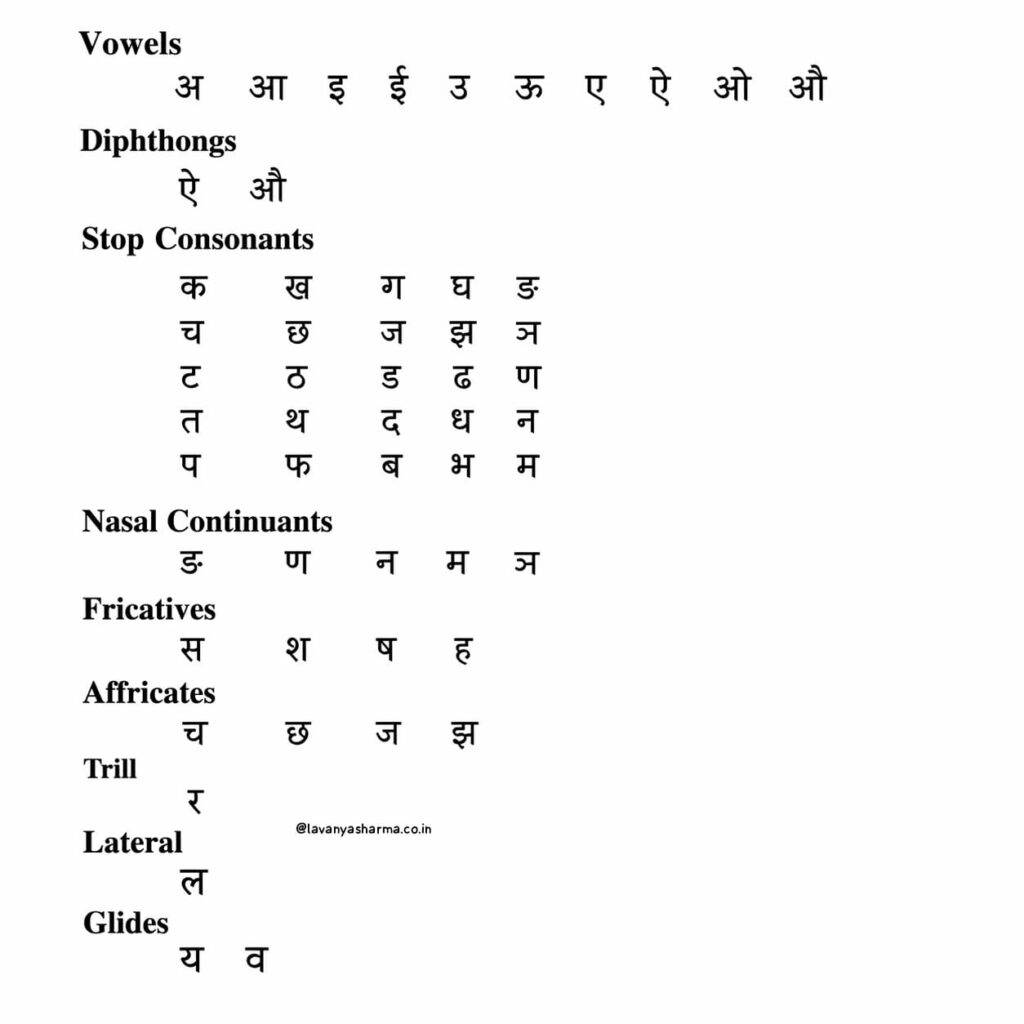
Speech sounds are produced by the combined action of different systems in the body. These sounds are broadly classified into vowels and consonants based on how they are produced in the vocal tract.
Vowels are speech sounds produced with an open oral tract, where there is no obstruction to the airflow. The tongue is positioned low or freely in the mouth, and air flows smoothly. Common examples include /a/, /i/, and /u/. In most languages, vowels appear at the beginning of the alphabet system. Generally, the nasal tract remains closed while producing vowels, although some languages may have nasalized vowels.
Consonants, on the other hand, are speech sounds produced with some form of obstruction in the oral tract. They are further classified based on the manner of articulation:
- Stop consonants (e.g., /k/, /g/, /t/, /d/, /p/, /b/) are produced by completely blocking the airflow and then releasing it suddenly.
- Affricates (e.g., /c/, /j/) are similar to stops but have a slower release, as the tongue touches and moves away from the palate gradually.
- Fricatives (e.g., /s/, /h/) are produced with a narrow constriction in the oral tract, allowing air to pass with friction.
- Nasal sounds (e.g., /m/, /n/, /ŋ/) are produced when the oral tract is closed and air passes through the nasal tract due to the open velopharyngeal port. These are called nasal continuants because they can be prolonged.
- Diphthongs (e.g., /ai/, /au/) are combinations of two vowel sounds where the tongue moves from one vowel to another.
- Glides (e.g., /y/, /v/) are also combinations of vowel-like sounds, but the movement is faster than in diphthongs.
- Laterals (e.g., /l/) are produced when the center of the oral tract is blocked, and air flows from the sides of the tongue.
- Trills (e.g., rolled /r/) are produced by repeated contact of the tongue with the palate.
Most speech sounds like vowels, stops, affricates, and fricatives are produced with the nasal passage closed, while nasal sounds involve an open nasal passage. Thus, speech sounds can be systematically classified based on how air flows and how different parts of the vocal tract are used during their production.
Place of articulation
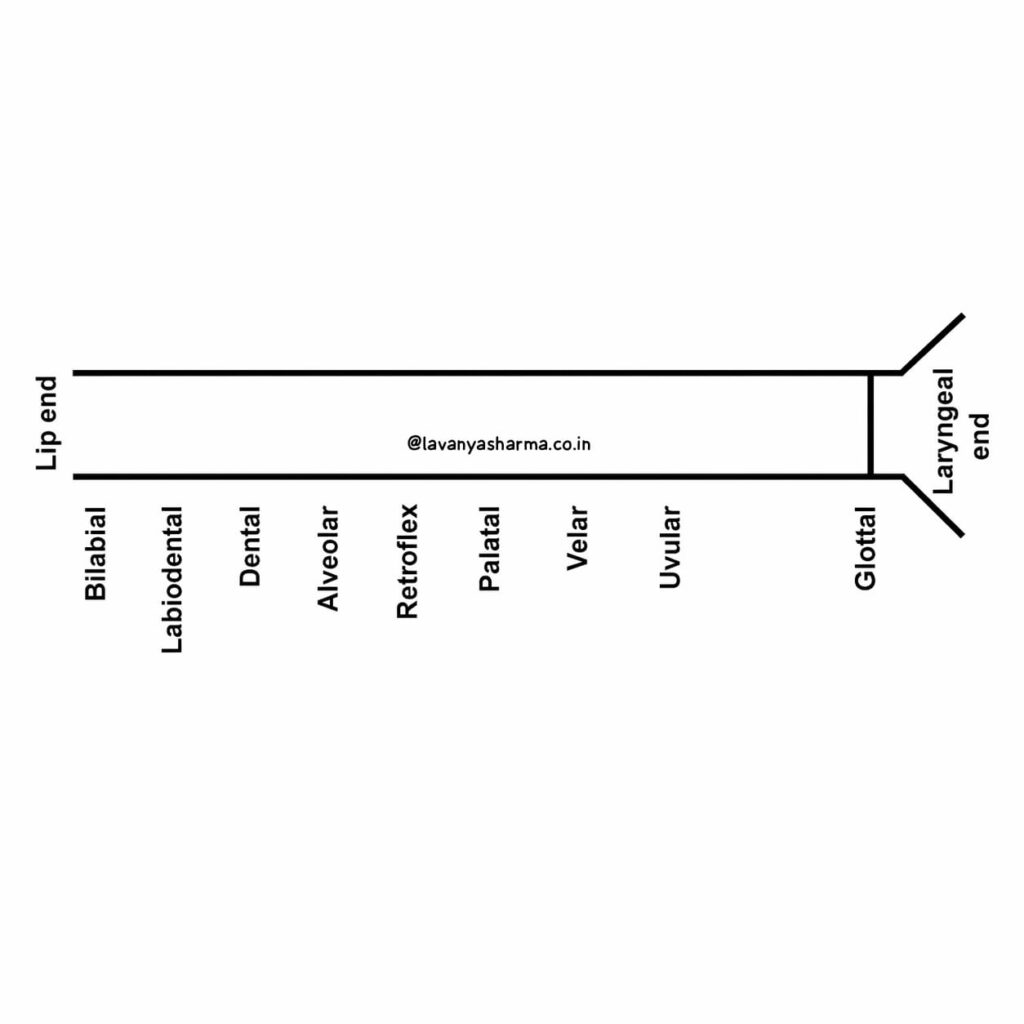
The place of articulation refers to the specific location in the oral tract where speech sounds are produced. Since this concept has already been discussed earlier, it is not explained again in detail here. However, it is important to briefly review the different places of articulation by referring to a schematic diagram of the vocal tract. This helps in understanding how various speech sounds are formed using different parts of the mouth and throat.
Development of communication
Communication begins right from birth, as the newborn and mother start interacting immediately. A baby shows early responses such as searching for human voices and reacting with pleasure or surprise. Through repeated interactions, the infant gradually learns to express intentions and develop communication skills. In the first few months, infants can differentiate sounds, recognize voices, and respond to intonation patterns. They also begin to use eye gaze, head movements, and hand gestures, which form the basis of early communication.
By 3–4 months, babies start engaging in simple interactions using eye contact, which later develop into early conversations. Communication progresses from reflexive and unintentional behaviors (like crying) to intentional communication. Initially, the child’s responses are not purposeful, but gradually they begin to use gestures and vocalizations with eye contact to communicate. By the second year, children start using words instead of gestures, and language becomes a more effective way to express their needs and ideas.
During the preschool years, children improve their communication by using intonation, stress, and emphasis to make their message clearer. They can even adjust their speech when talking to younger children. In the school-age period, children develop advanced communication skills, including paralinguistic (tone, stress), non-linguistic (attention, memory), and meta-linguistic abilities (thinking about language). They learn to use language creatively—for example, to express emotions, role-play, or even sarcasm—and adjust their communication based on the listener.
Although meta-linguistic skills begin in preschool years, full development occurs around 7–8 years of age, when children can better understand grammar and language structure. Overall, communication starts at birth and does not initially depend on speech. As language develops, communication skills also improve, making interaction more effective and meaningful.
Factors affecting acquisition of speech, language and communication
The following is a list of some general factors affecting/hindering language acquisition, its use and maintenance.
- Inadequate stimulation (talking and playing with the child)
- Delayed general development (global developmental delay) with respect to physical (motor skills) and cognitive development (Mental retardation)
- Specific difficulty with language learning (Specific language impairment). Not very interested in language, prefers other modalities e.g., physical activities with reduced verbal output.
- Poor control/or co-ordination of speech muscles as lips, tongue.
- Medical conditions (organic causes cited below)
- Inadequate awareness of communication, lacks ‘communication intent’
- Impaired hearing, e.g., ear infection, fluid in ear, impacted earwax
- Changes in child’s environment, e.g., moving/shifting of town/places
- Exposure (sudden) to too many languages
- Inadequate opportunity for speech, e.g., the child everyone talks to, the ‘babied’ child has a more dominant sibling etc.
- Emotional factors, e.g., behavioral problems, anxiety, pressure to perform etc.
- Short attention span
- Family history of speech and language delays or difficulties


2 thoughts on “Unit 1: Communication and Language”
This is extremely incredible information on language and communication lecture notes.
Thank you, Mariana