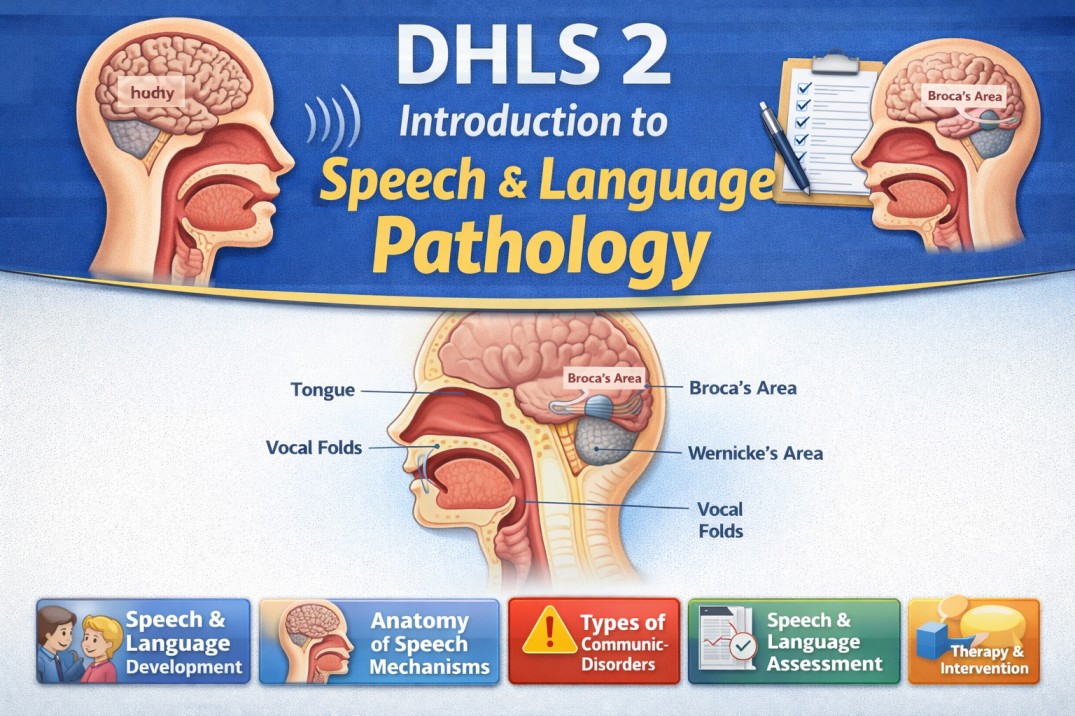
Speech-language deficits are among the most common childhood communication disorders, affecting about 5–8% of preschool children. If left untreated, these problems can lead to behavioral issues, mental health concerns, reading difficulties, poor academic performance, and even school dropout. Despite effective interventions, these issues are often not identified early.
Speech-language impairments include both speech disorders and language disorders. Speech disorders involve difficulties in articulation, fluency, and voice, while language disorders affect the form (grammar, phonology), content (semantics), and use (pragmatics) of language. These are broadly called communication disorders, which impact both receptive skills (understanding language) and expressive skills (producing meaningful speech and language).
A spoken language disorder (SLD) refers to significant difficulties in understanding and/or producing language across different forms such as speech or sign language. When this occurs without other conditions like intellectual disability or hearing loss, it is termed specific language impairment (SLI). These disorders can continue throughout life, although symptoms may change over time.
Table of Contents
ToggleTypes of speech and language disorders
There are varieties of ways how speech and language disorders can be classified. One way is as follows:
- Speech disorders
- Voice disorders
- Articulation disorders
- Fluency disorders
- Resonance disorders
- Language disorders
- Developmental
- Acquired
Speech disorders
Link: https://notes.lavanyasharma.co.in/unit-1-communication-and-language/
Link: https://notes.lavanyasharma.co.in/unit-2-anatomy-and-physiology-of-speech-mechanism/
Voice disorders
Voice is the modification of air from the lungs at the larynx, which is further shaped by the vocal tract. Its production depends on four main factors: central nervous system control, pulmonary air pressure, vocal fold vibration, and the configuration of the vocal tract. Voice is a multi-dimensional process that can be analyzed in different ways. It varies naturally across different age groups and genders, such as babies, children, adults, and the elderly, each having typical voice characteristics. A voice is considered normal when it matches the expected pitch, loudness, and quality for a person’s age, gender, and cultural background. Any significant deviation from these norms is considered a defective or abnormal voice.
Prevalence of voice disorders
Clinical experience shows that voice disorders account for about 6–10% of communication disorders. They are quite common in adults, but often go unnoticed because they usually do not affect speech understanding. Temporary conditions like cold, laryngitis, breathiness, and nasal voice changes are common, so people tend to ignore them. However, this can be risky, as chronic or serious conditions affecting the same vocal areas may also be overlooked and left untreated.
Causes of voice disorders
Voice disorders can develop either suddenly or gradually. Sudden onset may be caused by factors such as trauma, infection, stroke (CVA), inhalation injuries, intubation, or severe allergic reactions. In contrast, gradual onset is often associated with conditions like neurological disorders, muscle tension, vocal abuse or misuse, vocal fold growths, gastro-esophageal reflux, and chronic allergies.
Not all voice disorders have a clearly known cause, and many may result from multiple factors rather than a single cause. Based on their nature, voice disorders are broadly classified into functional and organic types, each having further subcategories. Some disorders may overlap both categories due to multiple underlying causes.
Types of voice disorders
Voice is considered disordered when its pitch, loudness, or quality is altered in a way that sounds abnormal to the listener. Voice disorders are mainly classified into pitch, loudness, and quality disorders, and they may arise due to organic/physiological causes or functional misuse of normal vocal structures. Common types include puberphonia, spastic dysphonia, hypernasal or hyponasal voice, and harsh, hoarse, or breathy voice qualities.
Speech disorder related to mouth
Natal complications can affect the structure and function of the mouth, leading to speech problems. These disorders may involve the lips, tongue, teeth, jaw, and palate. Common examples include cleft lip, cleft palate, macroglossia, microglossia, misaligned teeth, and submucous cleft.
Cleft lip and palate
A cleft lip is a split in the upper lip, while a cleft palate is a split in the roof of the mouth. These occur during early fetal development when the lip or palate does not fuse properly. They are among the most common birth defects, occurring in about 1 in 600 to 1000 births. Clefts may be unilateral (one side) or bilateral (both sides of the mouth)
Types of clefts
- Cleft lip without a cleft palate
- Cleft palate without a cleft lip
- Cleft lip and palate
In most cases, the exact cause of cleft lip and palate is unknown, though it may be hereditary in some individuals. These conditions are found to be more common in Asians, less common in whites, and least common in blacks. Additionally, boys are affected more frequently than girls.
Symptoms
- Feeding problems
- Regurgitation of food and water
- Ear infections and hearing loss
- Delayed development of speech and language
- Articulation errors
- Nasal emissions
- Hypernasality
Sub mucous cleft
A submucous cleft palate is a condition where there is an underlying defect in the palate without an obvious opening in the mouth. In the soft palate, it is characterized by a deficiency of muscular tissue in the midline and improper alignment of the muscles. In the hard palate, it appears as a bony defect along the center, which may be detected as a notch or depression when the palate is examined by touch. This condition is often associated with a bifid or cleft uvula. The exact cause is unknown, though it may sometimes be hereditary. The symptoms and management are generally similar to other forms of cleft palate.
Tongue abnormalities
- Microglossia: In Microglossia the size of the tongue is abnormally small. A tiny tongue will pose many difficulties related to speech and swallowing. There is no treatment for this condition, and the affected person will have to be trained to use the tongue to the best of his/her abilities.
- Symptoms:
- Swallowing difficulties
- Articulation errors
- Symptoms:
- Macroglossia: Macroglossia is a condition where the tongue is bulky and enlarged. This is more common than microglossia. It can be congenital or acquired. Acquired macroglossia occurs in conjunction with some other conditions like a tumor of the tongue, hemangioma and acromegaly. The cause for congenital macroglossia is unknown. The treatment of macroglossia involves the removal of the cause that gives rise to this condition. Sometimes, surgical stripping of the tongue to reduce the heavy musculature is also done.
- Symptoms:
- Teeth abnormalities
- Swallowing difficulties
- Articulation errors
- Symptoms:
- Ankyloglossia: Ankyloglossia results when the lingual frenulum fuses with the floor of the mouth. However, complete fusion rarely occurs; a partial ankyloglossia or “tongue-tie” is a much more common condition. The treatment is to surgically release the connection between the frenulum and the floor of the mouth.
- Symptoms
- Lisping
- Articulation errors
- Symptoms
- Cleft tongue: It is a condition where the tongue has a cleft running right across it horizontally or vertically. Complete cleft is extremely rare. Partial cleft presents as a deep groove in the middle of the tongue and is a common feature in the oro-facial-digital syndrome. Cleft tongue is of little importance other than causing difficulty in eating as food gets stuck in the cleft.
Disorders of articulation
Articulation refers to movement, specifically the movement of the speech mechanism to produce speech sounds. It involves coordinated actions of structures such as the tongue, lips, and soft palate, which come together, separate, and change shape to form different speech sounds. Most children acquire speech sounds of their language naturally and without formal instruction. However, some children experience significant difficulty in this process, leading to frustration and communication problems. These difficulties in school-aged children are commonly treated and are known as misarticulation.
Articulation disorder occurs when a person is unable to correctly produce one or more speech sounds of their language. When errors involve patterns or groups of sounds, they are often referred to as phonological disorders. Articulation disorders are considered speech disorders rather than language disorders because they are related specifically to speech production. These disorders can create serious communication difficulties, and in severe cases, a child’s speech may become unintelligible to listeners.
Classification of articulation disorders
Articulation disorders can be classified based on types of misarticulation noticed or causative factors as follows:
Types of articulation disorders
A sound ‘Substitution’ involves the production of a wrong sound in place of a right one. For example, child who says ‘ladio’ for ‘radio’ issubsituting ‘i’ for ‘r’.
An ‘Omission’ is an absence of a required sound in a word. For example, a child who says ‘ka’ for ‘car’ or ‘boo’ for ‘boot’, omits the ‘r’ and ‘t’. Here the omitted sounds are in the final position within the words.
A ‘Distortion’ is a sound production that does not match its normal production. In other words, distortions are imprecise productions. A ‘slushy’ production of ‘s’ in soup, for example, is a distortion.
In ‘Addition’, a sound that does not belong to a word is added. For example, the child who says ‘iskuul’ for ‘school’ is adding an extra sound at the beginning of the word.
The production of each sound is judged as correct, distorted, substituted or omitted and a sound is added to a word is also noted.
The position of the misarticulated sound within the word as initial. medial or final, are also determined. This procedure is called ‘sound-by-sound analysis‘. This type of analysis is better suited to those clients who show only few errors of articulation. For clients who misarticulate many sounds, an analysis of the overall pattern of misarticulation may be more appropriate.
Causes of articulation disorders
The causes of misarticulation can be divided into the following categories:
- Structural abnormalities: Structural abnormalities such as clefts in the lip, palate may lead to misarticulation of sounds. Often structural abnormailities include tongue-tie, abnormally large tongue, and small tongue. Impairment in the teeth like missing teeth or overbite and under bite may result in misarticulating.
- Sensory abnormalities: Sensory causes such as hearing loss lead to misarticulation of sounds.
- Psychosocial factors: Psycho-social factors include age, gender, socio-economic status, sibling influence and family transmission. More children in lower economic status are bound to have misarticulations.
- Neuro-motor abnormalities: There can be misarticulation due to damage to the central nervous system or peripheral nervous system specifically to the 5th, 7th, 9th, 11th and 12th cranial nerves. If the misarticulation is due to neurological problems, it is referred to as Dysarthria and if it due to higher brain level programming defect, it is referred to a s Apraxia of speech.
- Cognitive and linguistic factors: Children with misarticulation may also be impaired with language skills, which involve the knowledge of phonological rules and sentences structure.
- Other factors:
- Age: Phonological development is a gradual process and it continues to develop until the age of 8 years.
- Gender: Females are slightly ahead of males in acquisition of speech sounds.
- Idiopathic: Sometimes without any obvious reason the chid will have misarticulations and it is termed as idiopathic.
Fluency Disorders
Fluency refers to the smooth, easy, and continuous flow of speech. The word “fluency” comes from the Latin root fluere, meaning “flow.” In communication, fluency means effortless and continuous speech produced at a normal or rapid rate. Fluency has two main components:
Timing and effort. Timing includes continuity, rate, and rhythm, while effort refers to both mental and physical effort involved in speech production. Effort in speech includes mental effort used in the coding process and physical effort involving the respiratory, phonatory, and laryngeal systems. Any disruption in these systems can affect fluency. Continuity refers to smooth transitions between sounds, syllables, words, and phrases. Breaks in continuity may appear as pauses, hesitations, repetitions, prolongations, interjections, incomplete phrases, or irregular speech patterns. These interruptions disrupt normal fluency.
Rate of speech refers to how fast or slow a person speaks and is measured in syllables or words per second or minute. Very slow or very fast speech can also affect fluency. However, normal speakers may sometimes show disfluency during stress, fear, or when using pauses for emphasis, which is not considered a disorder.
Fluency disorders include stuttering-like disfluencies (SLDs) and other disfluencies (ODs). SLDs include sound or syllable repetitions, prolongations, and blocks. ODs include pauses, hesitations, and interjections. These are commonly seen in young children during speech and language development but may become a concern when persistent.
Disfluent behaviors in speech are broadly classified into stuttering-like disfluencies (SLDs) and other disfluencies (ODs). These are seen in all individuals but are more common in very young children during the development of speech and language. SLDs include sound or syllable repetitions, prolongations, and blocks (also called articulatory fixations). ODs include audible or inaudible pauses, hesitations, and interjections.
ODs are particularly frequent in preschool children and are considered a normal part of speech development. This stage is referred to as Normal Non-Fluency (NNF), which is associated with the natural acquisition of speech and language skills. The key difference between Normal Non-Fluency (NNF) and stuttering is the nature, frequency, and persistence of SLDs and ODs, with stuttering showing more persistent and marked disfluencies.
Stuttering
Stuttering is a fluency disorder characterized by repetitions, prolongations, and blocks (also called articulatory fixations). It may also include involuntary body movements known as secondary behaviors. Stuttering usually begins in childhood and has a gradual onset. It may develop after experiences such as shock, fright, illness, or even through imitation. Emotional conflict can also contribute to its development.
The overall incidence of stuttering is about 5% in the general population, with the highest prevalence seen during the preschool years. Males are more frequently affected than females, possibly due to delayed myelination in males or greater parental pressure on boys. Stuttering is also found more commonly in families with a history of stuttering, indicating a genetic influence. A higher occurrence has been reported in twins, especially monozygotic (identical) twins.
Characteristics features of stuttering
The common characteristics of stuttering include sound, syllable, and monosyllabic word repetitions, along with dysrhythmic phonations, tense pauses, and sound prolongations. Individuals may also show an abnormally fast speaking rate, abnormal pitch or sound quality, and excessive tension in muscle groups that are not involved in speech production.
Disfluencies are typically more frequent at the beginning of utterances, especially on initial words. They occur more often on content words than function words and are more commonly seen in words that begin with consonants rather than vowels.
Secondary behaviors that occur with stuttering
Secondary behaviors are those behaviors that do not directly involve the speech mechanism but are commonly observed in persons who stutter (PWS) during moments of stuttering. These behaviors are often considered reflections of anxiety and tension associated with speaking.
Common secondary behaviors include jerky movements of the head, frequent blinking of eyes, wrinkling of the forehead, distortions or tightening of the mouth, quivering of the nostrils, facial grimacing, and abnormal limb movements such as foot tapping. In addition to these physical behaviors, PWS may also show avoidance behaviors like poor eye contact with listeners and avoiding speaking situations altogether.
They may further experience physiological signs of anxiety and tension during speech, such as sweating, shivering, and increased heart rate.
Causes of stuttering
Various theories have been proposed to explain the possible causes and contributing factors of stuttering. In earlier times, the tongue itself was believed to be the cause. Later, several scientific theories were developed to explain the condition from neurological, psychological, and learning perspectives.
The Cerebral Dominance Theory proposed by Orton and Travis (1978) suggests that stuttering results from a failure in establishing dominance of one cerebral hemisphere over the other. Some studies also found stuttering in children who were forced to change their handedness.
The Demands–Capacities Model by Starkweather (1990) states that stuttering occurs when the demands placed on a child exceed their speech and language capacities to meet those demands.
The Breakdown Hypothesis suggests that stuttering has an organic basis due to a constitutional predisposition in the child, which is further aggravated by environmental factors such as stress and fear.
The Repressed Needs Hypothesis views stuttering as a neurotic symptom rooted in unconscious needs. According to this view, stuttering is an intentional but unconscious behavior driven by hidden psychological conflicts.
The Approach–Avoidance Conflict and Learning Theories explain stuttering as a learned behavior acquired through conditioning. Primary stuttering is believed to develop through classical conditioning, while secondary stuttering develops through operant conditioning.
Cluttering
Cluttering is a fluency disorder that often co-occurs with stuttering. It is characterized by a lack of awareness of the speech problem, a short attention span, and disturbances in perception, articulation, and speech formulation processes before speaking. It is also considered to have a hereditary predisposition. Cluttering is described as the verbal expression of a central language imbalance, which can affect multiple communication areas such as reading, writing, musicality, and general behavior (Weiss, 1964).
The exact cause (etiology) of cluttering is not clearly known. However, some suggested factors include an immature or impaired central nervous system and a mismatch or incongruity between thinking and speaking processes.
Characteristics of cluttering
- Obligatory symptoms: Weiss proposed 5 obligatory symptoms including excessive repetitions, lack of awareness, weakness of concentration and shortness of attention span, perceptual weakness and poorly organized thinking.
- Additional symptoms include excessive speech rate, excessive Interjections like the use of and, or, um, etc., vowel stops (pauses before initial vowel), articulatory and motor disabilities, grammatical difficulties, vocal monotony, jerky respiration and delayed speech development.
- Associated symptoms include reading disorder, writing disorder, lack of rhythmical and musical ability, restlessness and hyperactivity, deviations in EEG findings, lag in maturation and heredity and genetic factors.
Neurogenic stuttering
Neurogenic stuttering is associated with neurological events. It is acquired, and can result from damage to central nervous system. Stuttering should be labeled as acquired only when the onset of the disfluent speech occurs following some neurological trauma or insult. It is also termed as SAAND, that is, stuttering associated with acquired neurological disorders. It is generally seen in adults due to stroke, tumors, or other neural conditions.
Speech characteristics of neurogenic acquired stuttering
- Repetitions and prolongations are not restricted to initial syllables.
- The phonemic foci of disfluencies may differ from developmental stuttering Speech characteristics of neurogenic acquired stuttering.
- There is no particular relationship between disfluency and the grammatical function of word, so that small function words may be as troublesome as content words.
- Self-formulated speech may be easier than automatic speech tasks.
- There is no adaptation effect.
- The speaker may not necessarily be anxious about his stuttering.
- There may not be any secondary symptomatology such as facial grimacing and fist clenching.
- Absence of situational or individual variability.
- No change in stuttering under fluency inducing conditions like singing, shadowing and choral reading, etc.
Language Disorders
Language development can be arrested/hindered by several factors such as brain damage caused during prenatal, natal and postnatal period leading to conditions like mental retardation, cerebral palsy, dysphasia/aphasia in childhood. It could also be affected due to sensory defects such as congenital hearing impairment and oral structural defects such as cleft palate. Severe socio-emotional disorders in childhood like autism could also bring about delayed and deviant language development. Some children also exhibit learning disabilities leading to serious academic failures during schooling. Such conditions could be evidenced by few or several of the following speech and language characteristics/manifestations during infancy to adolescence/adulthood.
Lack of onset of speech or delay in the onset of speech is seen as partitional/total mutism with limited vocalization or total lack of speech. With delayed onset, if speech is developed, abnormal, inadequate and/or deviant language behavior is evidenced such as any of the following:
- Incorrect/inappropriate speech characteristics including voice, articulation and prosodic abnormalities.
- Limited speech output; failure to thrive, progress with age in terms of stages of language development, length and complexity variety of utterances, inadequate mastery of grammatical inflections, inadequate acquisition of grammatical categories of nouns, verbs, adjectives, adverbs, prepositions, etc.
- Atypical vocabulary and grammatical development seen as patchy acquisition of vocabulary on a single or a few selected topics (e.g., only nouns as names of objects, interest/fascination with numbers, alphabet, dates etc).
- Stereotyped and repetitive use of language such as echolalia, use of stock utterances of few topics only and repeated questions and others.
- Use of neologisms (new and nonexistent words in the language of exposure) who’s meaning is obscure to others.
- Lack of spontaneous and responsive speech seen as an inability/failure to initiate and sustain conversation indicating problems with interpersonal, two way communications in a given situation
- Difficulties with speech comprehension seen in the failure to comply with requests, questions, and an inability to derive meaning from others’ speech or failure to understand others’ speech etc.
- Abnormalities in use of nonverbal aspects in communication as in the poverty of facial expressions and gestures as pointing, showing, impaired emotion recognition and expression, failure to understand basic gestures and facial expression etc.
- Difficulties with reading and/or writing.
- Poor scholastic achievement.
Observation of any of these features by parents/teachers, doctors or any other professionals warrants a consultation with speech-language pathologist and audiologist. Several of these atypical features of language manifestations are found in specific combinations in the different clinical conditions of disabilities as mentioned earlier. The term language disorder therefore applies to a heterogeneous group of individuals who show diverse problems in the acquisition (developing) of comprehension (understanding) or production (expression) and, use of various aspects of language singly or in different permutations and combinations.
Language disordered individuals (children and adults) have major problems in language:
- Poor listening skills
- Limited skills in understanding spoken language
- Limited expressive language skills
- Limited or lack of use of morphological elements of language
- Limited use of sentence structures
- Inappropriate use of language
- Deficient use of language
- Limited conversational skills
- Limited skills in narrating experiences
In addition, certain language-disordered children and adults might also manifest some abnormal patterns of language, limited cognitive skills and later, problems of reading and writing.
Mental Retardation
Learning to speak is a complex process that requires coordination of content, form, and appropriate social use of language. The term intellectual disability (formerly called mental retardation) refers to below-average intellectual functioning or reduced mental capacity. Children with this condition show delayed, arrested, or incomplete intellectual development and are generally slower in all areas, including motor skills, social behavior, self-care, language, and adaptive (coping) skills. The severity can range from mild to profound.
Intellectual disability can have multiple causes. Some cases are genetic, such as Down syndrome, while others may result from infections, trauma, or metabolic disorders occurring during prenatal, natal, or postnatal stages. The child’s language development is usually limited across all areas, depending on the severity of the condition, availability of special education, and the age at which intervention begins.
Children with intellectual disability are typically slow in learning speech sounds and often make articulation errors even after learning them. Their speech and language characteristics include omission, substitution, or distortion of sounds; missing morphological markers; delayed first words; limited vocabulary; and slower word learning. Their vocabulary tends to be more concrete (e.g., names of objects) rather than abstract (e.g., emotions or feelings). They are also slower in combining words into phrases and sentences and face difficulty in understanding and producing complex sentence structures, often using only simple sentences.
Pragmatic (social communication) difficulties are also common. These children may be reluctant to use language in social settings, have difficulty initiating and maintaining conversations, and often give short or inappropriate responses depending on the context. Research shows that their language development is not abnormal but delayed; it resembles that of younger children and follows the same sequence of development, though at a slower pace, corresponding more closely to their mental age than their chronological age.
Children with mental retardation are generally slow in learning the speech sounds of the language. Once learned, they are likely to show many errors of articulation. Some of the general characteristics of speech and language include:
- Omit, substitute or distort speech sounds.
- Morphologic features are frequently missing.
- Slow in saying their first words.
- Produce fewer words.
- Learn new words at a slower rate and have less, varied, more concrete vocabulary i.e., names of objects etc than abstract concepts such as feelings, emotions etc.
- Slower in combining words into phrases and sentences.
- Experience difficulty in both understanding and producing various syntactic structures of language such as long sentences containing relative clauses etc.
- Sentence structures are limited to simple forms.
- The pragmatic problems of children with mental retardation can be striking.
The following problems are often noticed.
- These children are usually very reluctant to use the learned language skills freely or in social situations.
- They show difficulty in initiating conversation and maintaining a topic of conversation.
- They often give abrupt, short answers to questions and responses may be inappropriate to time, place and person.
A large body of research has shown that most children with retardation do not show any abnormal or unique types of languages but their language resembles that of younger children. That is they use language forms similar to those exhibited by normal children at an earlier age equivalent to their mental age rather than chronological age. Though the progress is slow, the child follows the same sequence of language development as the non-retarded.
Autism
Autism, first described by Leo Kanner in 1941, is a complex developmental disorder characterized by significant difficulties in social interaction, communication, and behavior. It usually begins in early childhood, typically before the age of three years. One of the most prominent features is a marked lack of appropriate social behavior and reduced desire to interact with others, including parents.
Children with autism often show unusual nonverbal behaviors. Unlike typical infants who respond to faces and smiles, a child with autism may focus on objects such as earrings or keys. They may resist physical affection, prefer being alone, and show little interest in social interaction. Such children may engage in repetitive activities, like arranging objects repeatedly, and may not seek help or point to objects. They are often absorbed in their own activities and may display self-stimulatory behaviors (SSBs) such as hand flapping, rocking, or repetitive movements.
- Child with autism do not show imaginative play like other children.
- The child may hold hands in front of the face and make snake like movements for hours on end.
- An entire morning may be spent sitting on the floor and rocking back and forth.
- The child with autism is deeply disturbed by a change in the routine. Everything must be the same, day after day.
In addition, some (not all) children with autism show:
- Self-injurious behaviors, i.e., they are prone to hurt themselves constantly as nail biting, scratching, etc.
- They may bang their heads against walls, pull their hair etc.
- Some children show talent in some areas such as they may have excellent memory for numbers or may be able to draw extremely well etc.
A strong preference for routine is another key feature. Even small changes in daily routines can cause distress. Some children may also show self-injurious behaviors like head banging, scratching, or hair pulling. Despite these challenges, some may exhibit special abilities, such as excellent memory or drawing skills. Initially, parents may suspect hearing impairment, as the child may not respond to speech but may react to nonhuman sounds.
Language and communication are significantly affected. Children with autism often have delayed language development and may not use language effectively for communication. They tend to learn concrete words (e.g., objects) more easily than abstract concepts or social terms. Their use of language may be restricted, applying words only to specific objects or situations.
Profound language disturbances are a major characteristic of autism. The unique language and communication of children with autism include the following characteristics:
- On their own, most children with autism do not learn language at the usual rate.
- They do not use whatever they have learned to communicate with others.
- The child with autism is more likely to learn words that refer to objects rather than those that refer to concepts, people or human relations.
- Some apparently difficult words are more easily acquired those that are easier to learn. The child may correctly use words like square, hexagon but not home, sister etc.
- The words learnt are used in a restricted sense for eg., the child may use the word ball’ to refer to only his/her own red ball of medium size. A smaller or bigger or a blue ball is not at all a ball for the child.
- One of the most striking and early language problems is echolalia. Echolalia,is parrot like repetition of what others say. Child may echo, TV commercials, words phrases, questions picked up from adult’s utterances.
- Children with autism generally speak in short, simple sentences and tend to omit various grammatical features such as ‘and’, is’, etc.
- The sentences may have wrong word order. A child may say, “Table on Hats” or “Put toy is in”.
- A notable aspect of his language is pronoun reversal. They typically refer to themselves as “you”, “he” or “she” and others as “I”.
- Pragmatic deficits such as use of inappropriate language, lack of eye,contact, lack of initiation of conversation and other deficits are very striking in children with autism.
Developmental Aphasia/ Specific Language Impairment
Some children may experience difficulties in speech and language due to brain damage caused by birth injuries, illnesses, or accidents. When the brain is affected by trauma, there is a high possibility of delays or impairments in speech and language development.
Aphasia is a language disorder that occurs due to brain injury, leading to partial or complete loss of language abilities. In contrast, some children show language difficulties without any clear cause such as hearing loss, intellectual disability, or motor and emotional problems. These cases are referred to as developmental aphasia, now more commonly known as Specific Language Impairment.
Children with this condition typically show signs around the age of two years, when delays in language development become noticeable. They often have difficulty understanding spoken language and may use fewer words to express their needs. Their speech may sound “telegraphic,” meaning they mainly use nouns and verbs while omitting grammatical elements like articles and tense markers.
The exact cause of this disorder is still unknown, but research suggests that the brains of children with language disorders may develop differently compared to typically developing children.
Acquired Childhood Aphasia (ACA)
Children who develop normally may lose previously acquired language skills due to brain injury, resulting in Acquired Childhood Aphasia (ACA). ACA is a language disorder that occurs after a period of normal language development and is caused by brain insult such as head injury, cerebral infections like Meningitis, or seizure (convulsion) disorders.
Most children with ACA show non-fluent aphasia. This type is characterized by sparse and effortful speech, along with difficulty in understanding spoken language (auditory comprehension). They also exhibit syntactic problems, often using simplified sentence structures, and have difficulty in naming objects (word-finding problems). In addition, they may show disturbances in reading and writing skills.
The clinical features of ACA differ from those seen in adult aphasia, as children’s brains are still developing and may show different patterns of recovery and impairment.
Attention Deficit Hyperactivity Disorder (ADHD)
Attention Deficit Disorder (ADD), often included under Attention Deficit Hyperactivity Disorder, is characterized primarily by inattention and impulsivity, with hyperactivity present in some children. Language disorders are frequently associated with this condition.
Children with ADD are highly distractible and find it difficult to focus, sustain attention, and complete tasks. Their impulsivity and distractibility interfere not only with academic work but also with play and conversations. They may interrupt others frequently and shift from one topic to another without warning, making communication less organized.
Language development in children with ADD may be delayed, with impairments seen across different aspects of language. They particularly struggle with the pragmatic (social use) aspects of language, such as maintaining a topic and following conversational rules.
In addition to conditions like autism, intellectual disability, and neurological impairments, several other factors may contribute to language disorders. Children with low birth weight, especially those born prematurely, are at higher risk for delayed language development. Similarly, children born to alcoholic mothers may also face developmental challenges. Limited social interaction and reduced opportunities for communication can further slow down the rate of language acquisition in children.
Cerebral Palsy (CP)
Some children develop motor or physical impairments due to brain damage occurring during prenatal, natal, or early postnatal stages. This condition is known as Cerebral palsy. It is a complex condition that is primarily defined as a motor disorder resulting from non-progressive brain damage sustained early in life.
Although the brain injury itself does not worsen over time, the clinical presentation may change as the child grows and develops. In other words, cerebral palsy is a non-progressive disorder in terms of brain damage, but its effects and manifestations can evolve with age.
Causes of cerebral palsy
The causes of Cerebral palsy are considered multifactorial, meaning several factors may contribute rather than a single cause. These factors can occur during prenatal, natal, or postnatal stages.
Prenatal (before birth) factors include intrauterine problems such as threatened abortion, maternal illness, toxicity during pregnancy (especially in the third trimester), antepartum hemorrhage, intrauterine growth retardation, and premature onset of labor. Difficulties during labor and delivery can also contribute.
Postnatal (after birth) factors associated with cerebral palsy include respiratory difficulties around birth, hypoglycemia (low blood sugar), hypothermia, infections of the central nervous system, severe seizures in early infancy, high bilirubin levels (jaundice) in the newborn period, and brain injury. However, many of these conditions are common and do not always result in brain damage.
A detailed history of pregnancy, delivery, and postnatal care is essential when evaluating a child with cerebral palsy. It is important not to attribute the condition to a single cause, as the exact etiology is often uncertain. In some cases, cerebral palsy may be linked to genetic factors or brain malformations.
Classification of cerebral palsy
The clinical classification of Cerebral palsy is based on the type and pattern of motor dysfunction observed in children. Major types include hemiplegia, diplegia, quadriplegia, spastic, dyskinetic, ataxic, and mixed forms. Children with cerebral palsy are often commonly referred to as “spastics,” though this term is informal.
In hemiplegia, one side of the body is affected, with the arm usually more involved than the leg. An early sign may be abnormal fisting of the affected hand. Quadriplegia (or quadriparesis) affects all four limbs, often with severe spasticity, and the arms are typically more affected than the legs. This type is frequently associated with severe intellectual impairment.
Ataxic diplegia involves cerebellar dysfunction and may have a genetic basis in some cases. Early hypotonia (low muscle tone) is seen, followed by delayed motor development. Children may show tremors during movements and have a broad-based, unsteady (stamping) gait.
Dyskinetic cerebral palsy is characterized by involuntary and irregular movements. These may include slow, writhing movements (athetosis), rapid jerky movements (chorea), and twisting postures (dystonia), affecting different muscle groups.
Mixed cerebral palsy is diagnosed when a child shows features of more than one type and cannot be classified into a single category.
Cerebral palsy is often associated with additional problems such as vision and hearing impairments, sensory and perceptual difficulties, speech and language disorders, learning disabilities, reduced intelligence, epilepsy, and emotional issues.
Speech and language disorders in cerebral palsy
Speech and language development in children with cerebral palsy varies widely. While some children may begin speaking early, others show significant delays. Typically, receptive language (understanding) develops before expressive language (speaking). Speech delay may present in different forms, such as persistence of infant-like speech with poor articulation or difficulty in processing auditory input.
The most common cause of delayed speech in these children is general intellectual impairment. Speech delay is often one of the earliest signs of developmental delay. Hearing impairment is the second most common cause of speech and language disorders.
Severe forms of cerebral palsy, especially spastic quadriplegia and dyskinetic types, are frequently associated with significant speech and language disorders. Additionally, social deprivation can further impact language development. Early identification and monitoring of speech development are essential, as delays may indicate underlying conditions that could be treated with timely intervention.